



In October 1884, 41 delegates from 25 nations took their seats in the Diplomatic Hall of the Department of State in Washington, D.C. They were there at the invitation of President Chester A. Arthur21st President of the United States (1881–1885).Read more on Wikipedia ↗, under an 1882 act of Congress that had directed him to sound out the world on a single question.
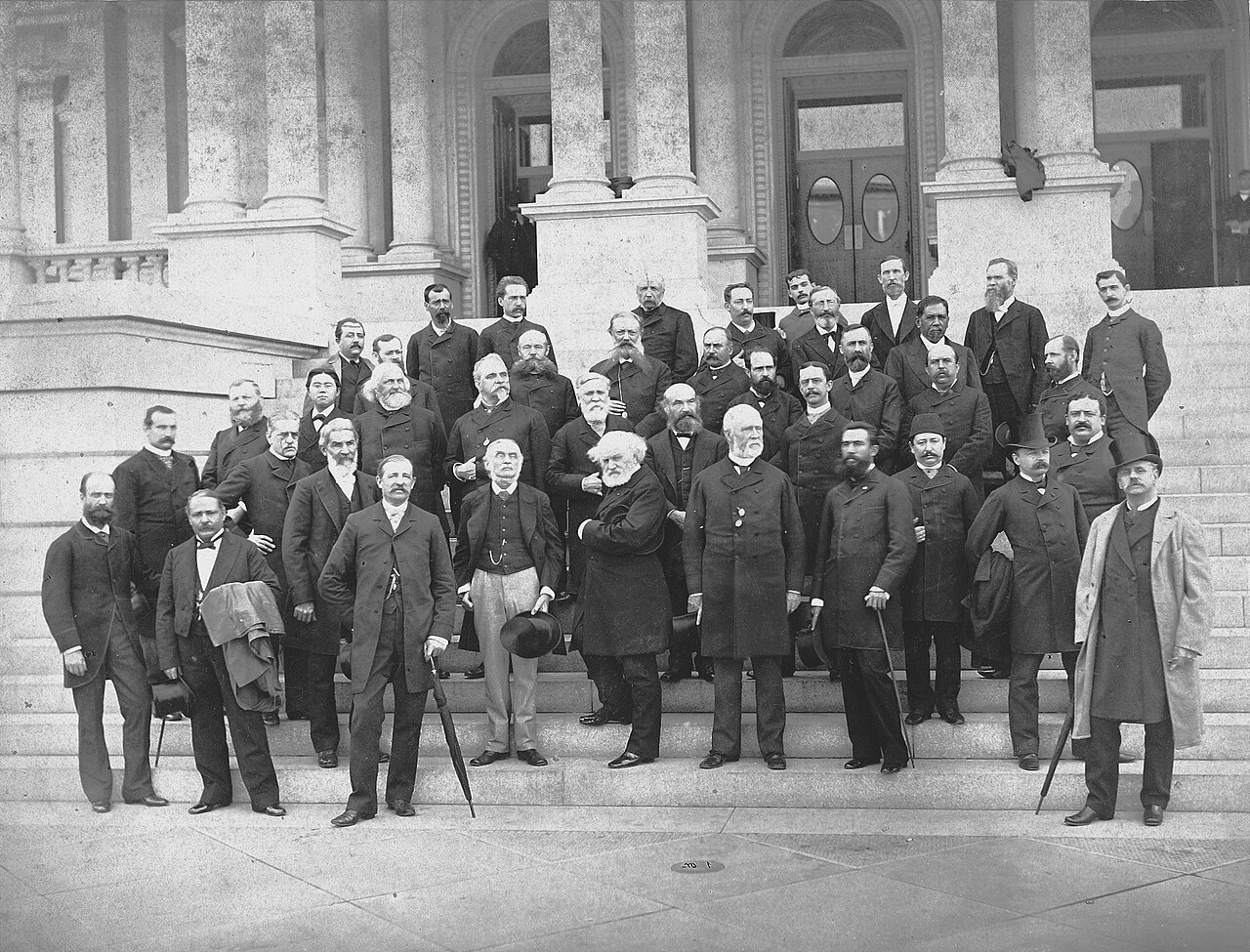
The question was not what time it is. It was where zero is.
Every map needs a starting line — the Meridian (geography)An imaginary north–south line on Earth's surface joining the two poles; every point on it has the same longitude.Read more on Wikipedia ↗ from which east and west are counted. In 1884 the world’s shipping sailed on charts drawn from several of them at once. A ship’s reported position meant one thing on a British chart and something else on a French one, and the difference was not a rounding error. It was two different zeros.
The delegates had gathered to decide whether the world could agree on one.
Eight sessions, seven resolutions
The conference met eight times that October — the 1st, 2nd, 6th, 13th, 14th, 20th and 22nd, plus a protocol-signing session on the first of November. What it produced was a Final Act of seven resolutions, signed on 22 October 1884.
The first resolution said a single prime meridian for all nations was desirable. It passed unanimously. The hard part came second: which meridian.
The answer, when it came, was defined with a watchmaker’s precision — not as a line on a map but as a physical fact inside a building. The Greenwich meridian, the resolution read, passes “through the centre of the Transit instrumentA small, precise telescope for timing the moment stars cross a line in the sky, usually the north–south meridian; once used to set clocks.Read more on Wikipedia ↗ at the Observatory of Greenwich.” Zero was to be the axis of one specific telescope, in one specific room, in one suburb of London.
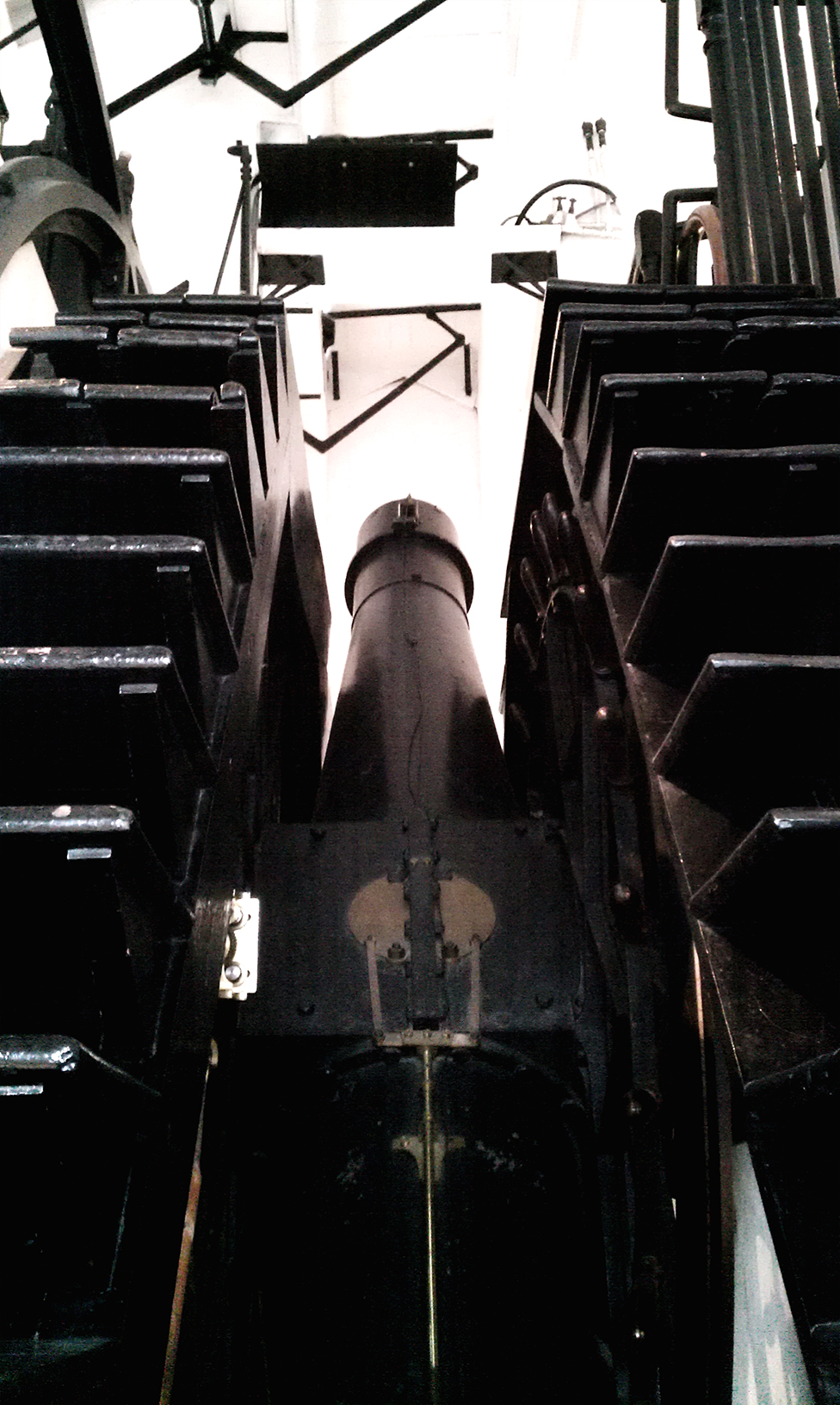

The vote was 22 ayes, 1 no — San Domingo cast it — and 2 abstentions: Brazil and France.
The table that ended the argument
The strangest contribution to the debate came from a delegate arguing against Greenwich.
Sandford FlemingScottish-Canadian engineer (1827-1915) who campaigned for worldwide standard time zones and the Greenwich prime meridian.Read more on Wikipedia ↗ sat in the room as a British delegate representing Canada, and he wanted a different answer. But the table he presented showed what the world’s shipping had already done. Of the vessels and tonnage in the world’s floating commerce, 65 per cent of ships — 72 per cent of tonnage — were using charts and almanacs counted from Greenwich. Paris, the runner-up, accounted for 10 per cent of ships and 8 per cent of tonnage.
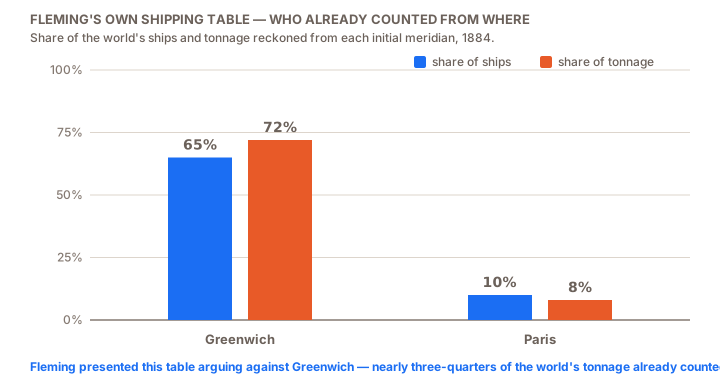
Fleming’s case against Greenwich arrived carrying the numbers that finished it. Whether the table decided the vote or merely confirmed a choice the shipping lanes had already made, the pattern is hard to miss: the meridian with the ships won.
There was no scientific argument for Greenwich. There could not be — a zero line is a convention, not a discovery. What Greenwich had was not truth but traffic.
A day to go with the line
A zero for longitude was only half of the work. The conference also voted on the day.
Resolution IV recommended a universal day “for all purposes for which it may be found convenient” — and, in wording that saved the whole enterprise, one “which shall not interfere with the use of local or other standard time where desirable.” It passed 23–0–2. The universal day was to be a Solar dayThe interval between two successive passages of the Sun across the same meridian. Its apparent length varies, while the mean solar day is 24 hours.Read more on Wikipedia ↗, beginning at mean midnight at the initial meridian, counted from zero to 24 hours — a proposal that cleared 15–2–7. The delegates even expressed the hope, carried without a division, that astronomical and nautical days everywhere would come to begin at mean midnight.
Counting the day from midnight at the zero meridian sounds abstract. It is the reason a navigator in the Pacific and an astronomer in Berlin could write down the same moment and mean the same thing — the seed of every coordinated timestamp since, down to the ones your phone exchanges right now.
What the conference did not do
This is where the story is usually told wrong.
The Meridian Conference did not invent time zones. It did not fix the International Date LineThe ragged boundary near the 180th meridian where the calendar date changes; crossing it adds or drops a day.Read more on Wikipedia ↗ — no treaty ever has. It explicitly declined to disturb local and railway time, in the very resolution that proposed the universal day. The delegates standardised a zero and recommended a day. Zones came later, from railways and national laws, and that is a different story — the railways invented time, not the diplomats.
The distinction matters because the Final Act is often credited with handing the world standard time in one signature. It did nothing of the kind. It handed the world a reference point and left everyone free to keep their own clocks.
The 27-year holdout
France had wanted a “neutral” meridian — one that “should cut no great continent — neither Europe nor America.” The proposal was defeated 3 to 21. When the Greenwich vote came, France abstained.
And then it went home and stayed on Paris time. Not for a season — for 27 years. The law of 9 March 1911 finally set French legal time to “Paris mean time retarded by 9 minutes 21 seconds.” That is Greenwich Mean Time (GMT)Mean solar time at the Royal Observatory, Greenwich; once the world's reference for civil time, now largely replaced by Coordinated Universal Time (UTC).Read more on Wikipedia ↗ by another name, arrived at without saying the word. Even then, France kept its own legal definition of the hour until 1978.
The conference could standardise a meridian. It could not standardise pride.
The zero moved
There is a metal line at Greenwich you can stand astride, one foot in each hemisphere. It marks the 1884 zero — the centre of the observatory’s transit instrument, as the resolution specified.
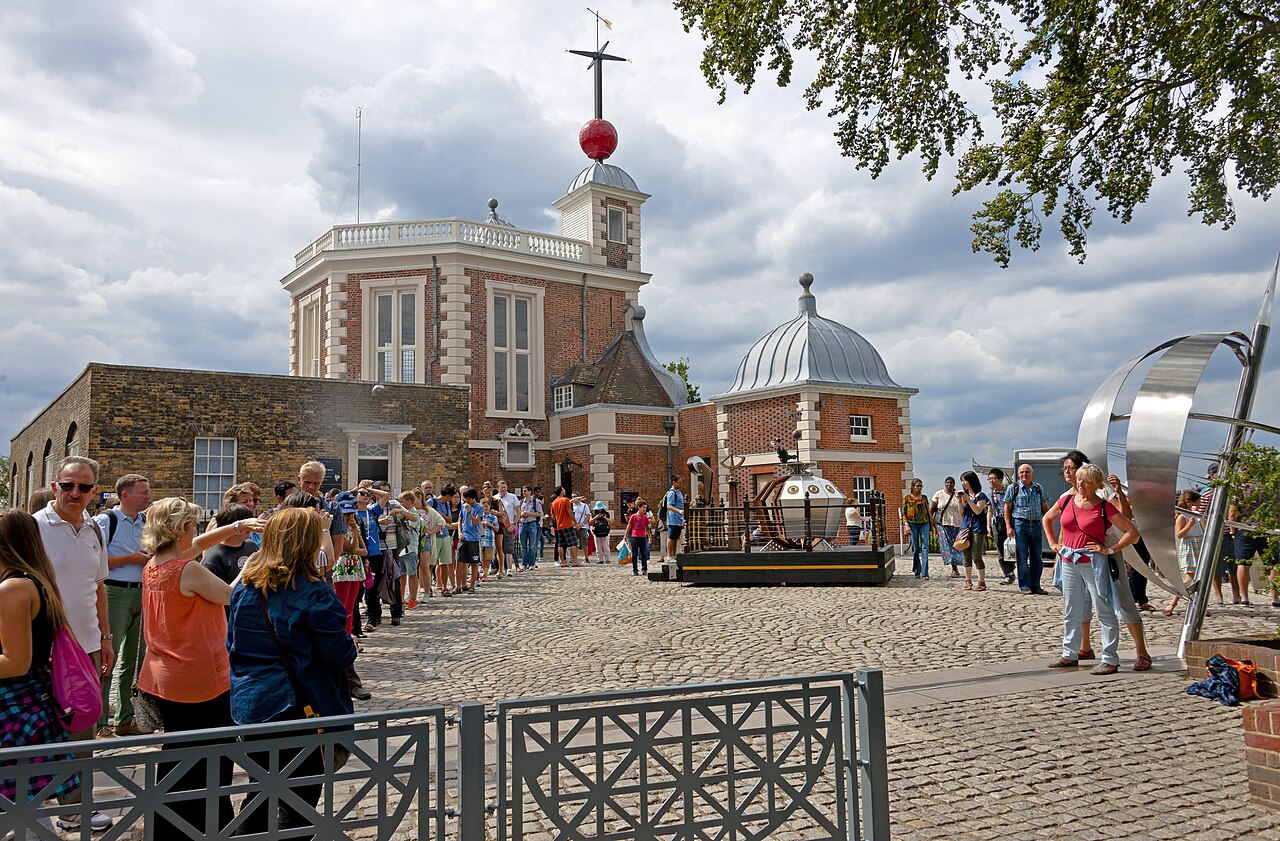

It is not where zero is any more.
Satellite geodesy redefined the reference frame, and today’s zero — the IERS Reference MeridianToday's zero-longitude line, maintained by the International Earth Rotation and Reference Systems Service (IERS); it runs about 102 metres east of the Greenwich line.Read more on Wikipedia ↗ — passes about 102.5 metres east of the 1884 line. Stand on that line and your phone will not read 0.000000°. The delegates’ choice still anchors GPS coordinates and the whole architecture of longitude; the world simply measures the same decision more precisely than a telescope’s axis ever allowed.
That is the afterlife of the conference: not a line in the ground but an agreement about where counting starts. Every timed thing since has inherited the problem the delegates solved — a measurement is meaningless until everyone agrees where zero is. A stopwatch solves it the cheap way: the moment you press start is zero, and every lap is counted from it (TiCaNo does this on every run). The world had to convene for a month to do the same.
Sources
- Protocols of the Proceedings of the International Meridian Conference, Washington, D.C., October–November 1884 — the conference’s own record; all vote tallies, resolution texts and quoted wording above are taken from it.
- Loi du 9 mars 1911 relative à l’heure légale (France) — the 1911 statute setting Paris mean time “retarded by 9 minutes 21 seconds”.
- Malys, Seago, Pavlis, Seidelmann & Kaplan, “Why the Greenwich meridian moved”, Journal of Geodesy 89:1263–1272 (2015) — the modern position of the IERS Reference Meridian relative to the 1884 Greenwich instrument, and why zero longitude is the terrestrial origin for UT1 rather than for GPS time.