




















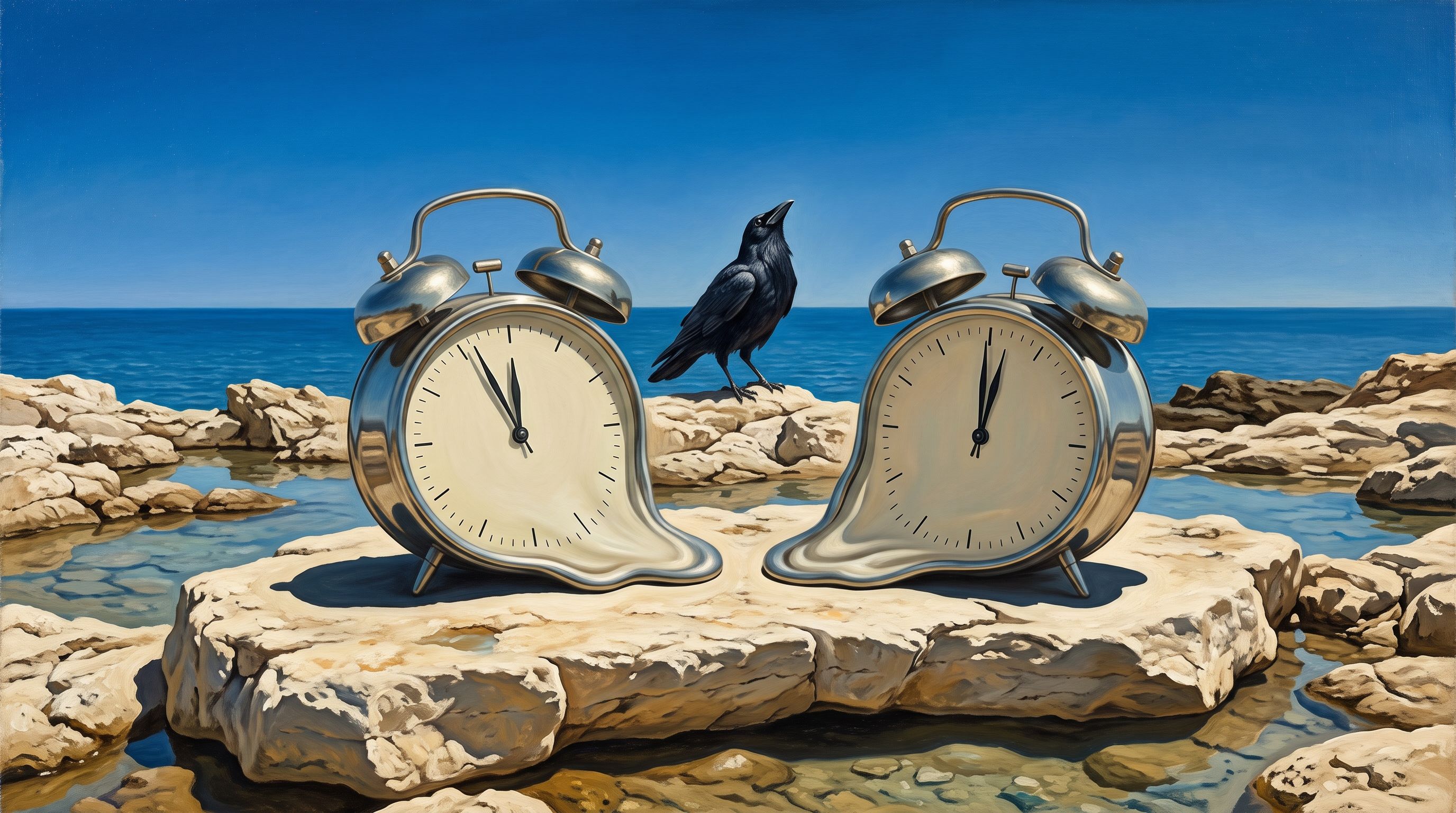
Until 2008, the official style manual of the United States government said that 12 a.m. meant noon and 12 p.m. meant midnight. Then the 2008 edition reversed it. The federal government of the country that put a man on the Moon held both positions on this one question within a single decade, and nobody outside the printing industry noticed.
So: is 12 PM noon? The short answer is the one every authority that has ruled on the question agrees on. The labels are broken, and you should not use them. NIST — the United States’ own time authority — states it plainly: the two labels “are ambiguous and should not be used”. Not “12 PM means noon, but be careful.” Should not be used.
Why the labels break, where the twelve comes from, and what to write instead — that is this post. The short version of all three: the abbreviations outlived the Latin that justified them.
Noon is neither before noon nor after noon
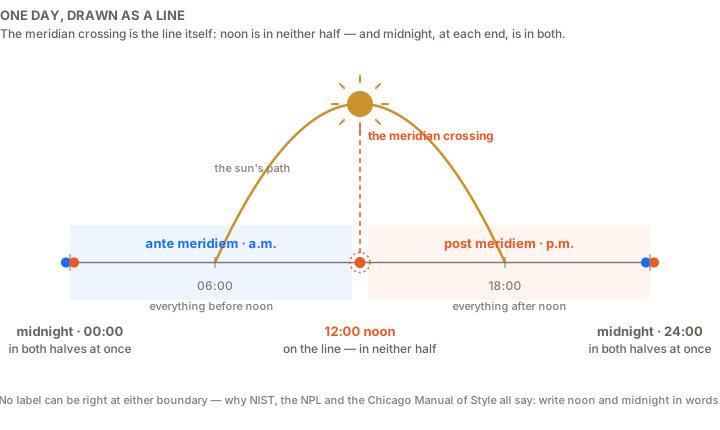
The failure is structural, not a typo. A.M. abbreviates ante meridiem, Latin for “before midday”. P.M. abbreviates post meridiem, “after midday”. Noon is the meridian crossing itself — the moment the sun is highest. It is not before that moment and not after it. It is the moment.
So “12 p.m.” asks noon to be after itself. The Chicago Manual of Style makes the argument without blinking: exactly twelve o’clock in the middle of the day is noon — “it can’t be after noon also — so ‘12 p.m.’ isn’t logical.” Midnight fails from the other side. It is twelve hours before the next noon and twelve hours after the last one, so it qualifies as both labels at once. That is not ambiguity you can resolve with care. Both words are wrong, and both words are right.
Every body that has examined the question has landed in the same place, each in its own register. The UK’s National Physical Laboratory finds “no official standards established for the meaning of 12am and 12pm”, and advises that the terms “should be avoided”. The AP Stylebook skips the philosophy and simply tells writers to spell out noon and midnight instead of abbreviating either one. And Royal Museums Greenwich — the observatory the meridian is named for — puts it in three lines. Noon is neither ante nor post meridiem, and midnight is also neither.
And then there is the case that opened this post. The US Government Publishing Office used 12 a.m. for noon as late as its 2000 edition, then reversed to the opposite convention in 2008. The current rule is 12 p.m. = noon. “Current” is doing real work in that sentence.
One more entry, because it settles the matter empirically: Japan, one of the world’s largest 12-hour-clock countries, runs the convention inverted. Under a legal directive from 1872, noon is 午前12時 — literally “12 a.m.” — and midnight is 午後12時, literally “12 p.m.” The National Astronomical Observatory of Japan confirms both expressions as official. There is no fact of the matter to translate. There are only two communities that made opposite agreements, which is what a convention looks like when the logic underneath it has died.
Why twelve, anyway
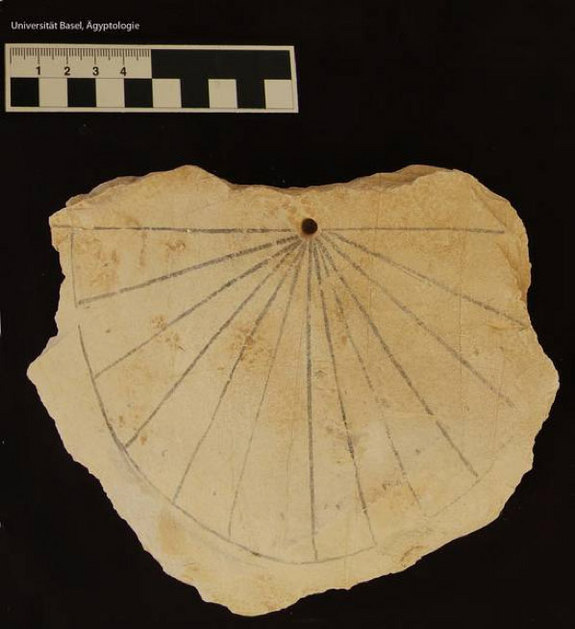
The twelve is older than almost everything. A sundial for daytime and a water clock for night-time, both found in the tomb of Pharaoh Amenhotep I and dated to around 1500 BC, each divided their half of the day into twelve hours. That is the 12-hour day: older than Rome, older than the alphabet most of you are reading in, older by two and a half millennia than the clocks that would mechanise it.
Why twelve and not ten? The tidy answer — twelve divides cleanly by 2, 3, 4 and 6 — is real but it is the rationalisation, not the origin. The older threads are counting practices. One is finger counting: twelve knuckle segments on a four-fingered hand with the thumb as pointer, a system still in use in parts of Asia. The other is the sky: roughly twelve lunar cycles in a year, which is the thread Britannica credits for the Babylonian twelve. Twelve and sixty come out of the same counting hand — which is why base-12 hours sit on top of base-60 minutes without anyone designing them to fit.
Rome imported the twelve-hour day around 293 BC, via a sundial captured in war, and instantly had the problem this blog exists because of. The hours were seasonal — about 45 minutes at the winter solstice and 75 at the summer one — and the only fixed point in the day was the middle. The Romans divided the day at that point — ante meridiem and post meridiem — centuries before any clock existed to display it. The words were furniture before the house.
What the abbreviations abbreviate
Ante meridiem reached English in the 1560s; post meridiem followed in the 1640s. The abbreviations are younger than that: a.m. in reference to hours dates from 1762, and was synonymous with plain “morning” by 1776. Someone in the eighteenth century shortened a Latin phrase whose literal meaning they mostly no longer needed — and that is the moment the trouble starts, because the part that got dropped was the load-bearing part.
Meridies means midday, and it is also the Latin word for south — the sun at noon, in the northern hemisphere, stands due south. That double life survives in English: a meridian is both the noon moment and the north–south line, the same line that time zones are drawn around. Ante meridiem does not mean “morning”. It means “before the sun crosses your line of longitude” — a definition that is astronomical, local, and exactly true twice a day at one precise instant. When your watch says 11:59 a.m., it is telling you the sun has not crossed the meridian yet. That is what the label was for. No wonder it has nothing useful to say about the crossing itself.
The clocks did not start at twelve
A suspicion: the 12-hour dial is a medieval European invention. It is not — the twelve predates mechanical clocks by millennia. But the reverse surprise is also true: the first mechanical clocks were not 12-hour at all. The 14th-century tower clocks, where they had dials, generally showed all 24 hours, on astronomers’ astrolabe-influenced dials. The oldest working mechanical clock in the world, Salisbury Cathedral’s from around 1386, had no dial whatsoever — it struck a bell and that was the service.
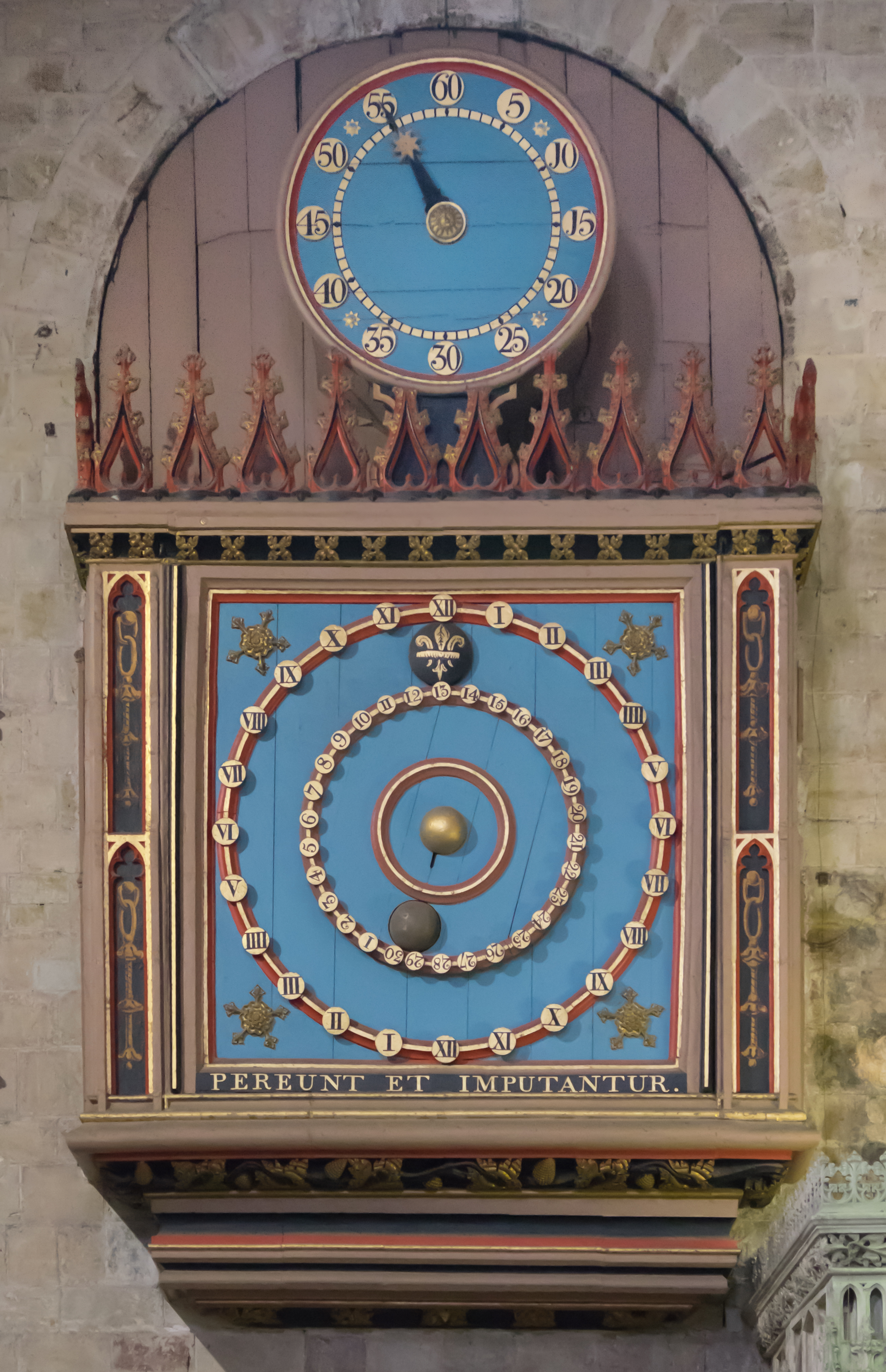
The 12-hour dial as we know it — twelve Roman numerals, the same twelve run twice, morning and afternoon in sequence on one face — is the double-XII system, and it became standard across Northern Europe only in the 15th and 16th centuries. You can still read the compromise on the surviving faces at Wells and Exeter. Italy, meanwhile, ran public 24-hour clocks that started counting at sunset — the “Italian hours” — from the 14th century until the system was officially abolished in 1755.
Why half the world writes 14:00
The modern 24-hour clock — midnight-starting, 00:00 to 24:00 — is a nineteenth-century construction, and it was built by railways, not armies. The Canadian Pacific Railway adopted it in 1886. Italy adopted it nationally in 1893, the first country to do so; Denmark followed in 1916, Greece in 1917, most of western Europe by the 1920s, Germany in 1927.
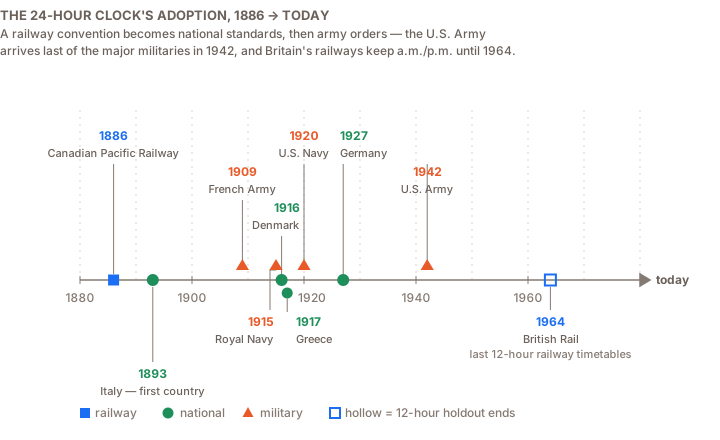
The militaries came late to a system now nicknamed after them. The French Army took it in 1909, the Royal Navy 1915, the US Navy 1920 — and the US Army not until 1942. Calling 24-hour time “military time” is an Americanism, a shadow cast by one country’s late adoption of a European railway convention. And Britain, whose railway time of 1840 standardised which hour the network kept rather than how it was written, kept 12-hour timetables until 1964.
The person who most nearly single-handedly pushed the world onto 24-hour time was a railway engineer, Sir Sandford Fleming — converted to the cause, the story goes, by missing a train in Ireland in 1876 because a printed timetable said p.m. where it meant a.m. His response was a memoir proposing a single 24-hour clock for the entire world. An AM/PM misprint is arguably the grandfather of the time-zone system.
Today the 24-hour clock is the most common time notation on Earth, the one aviation runs on globally in UTC — “1200 Zulu” has no a.m. in it — and the one the international standard ISO 8601 specifies. The United States uses 12-hour time almost exclusively in civilian life; the UK, Canada, Australia and a handful of others are mixed. The split is not random. It is the shape of who adopted what, when, and at whose timetable-printing budget.
What to write instead
The convergence is complete, and rare for style questions: NIST, NPL, CMOS and AP all give the same advice.
- Write “noon” and “midnight.” The words are unambiguous in every register, and CMOS notes they are always unambiguous — the only two time words that are.
- Or use the 24-hour clock. Noon is 12:00, no suffix, no argument. Midnight is 00:00 or 24:00, and ISO 8601 (since its 2022 amendment restored the form) assigns those two labels different meanings: start of day and end of day. If you are wondering which one your deadline is — that is a real question, and the standard makes you answer it explicitly rather than by accident.
- Never write either label where anything depends on it. The Internet’s timestamp standard, RFC 3339, bars unqualified local time outright for a related reason: interpretation of a local time “will fail in approximately 23/24 of the globe.” Machines are not asked to guess. Neither should your guests be.
The boundary that never mattered to a stopwatch
All of this — the dead Latin, the reversed government, the inverted Japan — lives entirely in wall-clock time. It is about naming the moment you start and the moment you stop.
The interval between them is untouched. When you press start on TiCaNo Stopwatch, it measures a difference between two moments on one clock. A difference needs no meridian, no ante, no post, and no agreement with anyone. 12:00 is ambiguous and always was. 12:00 minus 9:47 is two hours thirteen minutes, everywhere on Earth, forever.
Some measurements require the world to agree first. That is exactly why the good ones don’t.
Sources
- Times of Day FAQs — NIST, “12 a.m. and 12 p.m. are ambiguous and should not be used”
- Is midnight 12am or 12pm? — UK National Physical Laboratory, “no official standards established”
- Noon and Midnight — Chicago Manual of Style Shop Talk, “‘12 p.m.’ isn’t logical”
- AP Style: noon and midnight — Writing Explained, citing AP Stylebook 54th ed.
- Is noon 12 am or 12 pm? — Royal Museums Greenwich
- U.S. Government Publishing Office Style Manual, Numerals — the current rule; the 2008-edition reversal documented in Wikipedia’s 12-hour clock article
- 12-hour clock — Wikipedia, the Amenhotep I clocks, double-XII dials, and the GPO reversal
- Roman timekeeping — Wikipedia, the Samnite sundial, seasonal hours, ante/post meridiem
- Hour — Wikipedia, “Italian hours” and their abolition in 1755
- Duodecimal — Wikipedia, on finger counting and Ifrah
- 12-hour clock — Britannica, the Babylonian twelve and lunar cycles
- 24-hour clock — Britannica, Fleming’s missed train, the national adoption timeline, Zulu time
- Sandford Fleming — Wikipedia, the 1876 memoir Terrestrial Time
- ante meridiem — Online Etymology Dictionary, the 1762 abbreviation and the meridies etymology
- FAQ 4-1: 正午は午前12時? — National Astronomical Observatory of Japan, the inverted convention
- ISO 8601 — Wikipedia, on 00:00:00 vs 24:00:00 and the 2022 amendment
- RFC 3339 — IETF, on unqualified local time failing “in approximately 23/24 of the globe”